Portable Outdoor Sauna vs Permanent Cabin UK: Which Should You Choose?
If you're considering adding a sauna to your garden, the choice between a portable unit and a permanent cabin installation will shape how you use it, what you'll spend, and how long the decision lasts. Both approaches have genuine merit, but they suit very different situations.
Understanding the key differences
The fundamental split is between portability and permanence. A portable sauna—whether an inflatable hot tub conversion, pop-up barrel kit, or tent-style unit—can be set up in hours, moved between locations, or stored away. A permanent cabin is a fixed structure requiring proper foundations, potentially building regulation sign-off, and significant labour to install. The choice affects not just cost, but your garden's layout, long-term commitment, and how often you'll actually use it.
Portable sauna options
Inflatable saunas and hot tub conversions are the budget entry point. Brands like SereneLife and some Lay-Z-Spa models offer inflatable units that heat water to sauna temperatures. Setup takes 30 minutes to an hour, and they fold down for storage. The trade-off is durability—most last 2 to 4 seasons with careful maintenance—and heating efficiency. You're heating thin plastic walls, so energy costs run higher per use, and temperature stability in British weather is inconsistent.
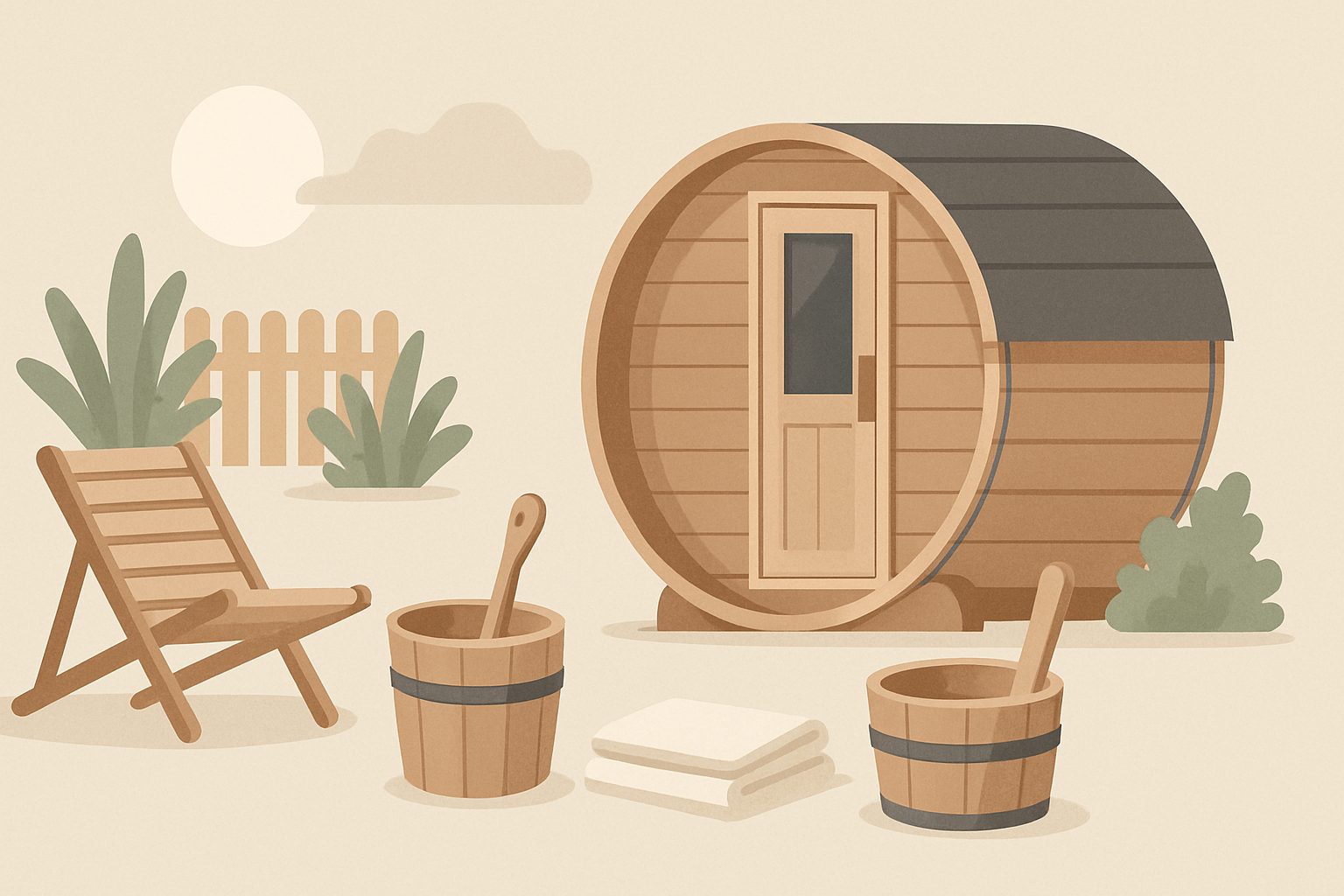
Pop-up barrel sauna kits are a middle ground. These arrive as flat-pack barrels (usually Cedar or Thermo-wood) with integrated wood-fired or electric heaters. Assembly takes 4 to 6 hours, but no special skills or foundations are required. They're genuine saunas—proper wood construction and efficient heating—yet still portable enough to move or disassemble if you relocate. The catch is weight; a full barrel sauna weighs 500 to 800 kg, so "portable" means a few people and a day's work, not casual relocation.
Tent-style fabric saunas are lighter again. Canvas or nylon frames with a heater (usually electric) offer genuine sauna heat with minimal setup. They're less durable than wood and can feel claustrophobic, but they're genuinely cheap and genuinely packable.
Permanent cabin saunas
A proper garden cabin—whether a custom-built room or a prefabricated log cabin—offers what portable units cannot: comfort, durability, and genuine integration into your garden space. A permanent cabin holds temperature far more efficiently because of proper insulation and solid walls. You'll heat it faster and spend less on energy per session. Families tend to use permanent installations far more often because the experience is more pleasant and reliable.
Build quality matters enormously. A budget prefab cabin (£3,000 to £5,000) will serve but may have poor ventilation, thin walls, and damp issues if not sited and maintained properly. A mid-range installation (£6,000 to £12,000) with proper planning permission, foundations, and ventilation typically lasts 15+ years. Higher-end bespoke builds (£12,000+) offer genuine luxury and can last 20+ years.
The real friction point is commitment. You need a level, well-drained spot; you may need building regulation approval (usually required if the cabin exceeds certain dimensions or has permanent utilities); and removing or relocating is expensive and disruptive.
Cost comparison
Initial outlay heavily favours portable units. A decent pop-up barrel sauna costs £1,500 to £3,500 installed. An inflatable or tent-style unit runs £800 to £2,000. A permanent cabin starts around £3,500 for a basic prefab and climbs steeply from there.
Running costs tell a different story. A permanent cabin with proper insulation costs roughly half as much per session to heat compared to an inflatable unit. Over 2 to 3 years, a cabin's efficiency advantage can offset much of its upfront premium—but only if you use it regularly (weekly or more).
Lifespan also matters. Portable units need replacement every 3 to 5 years; repair costs mount. A permanent cabin is a one-time expense amortised over a decade or more.
Space and installation
Most UK gardens have space for a portable unit. They can sit on decking, grass, or paving without preparation. Permanent cabins need a level, compacted base (concrete, timber deck, or gravel) and space that feels integrated, not squeezed.
Planning permission is rarely needed for portable units. Permanent cabins usually require it if they exceed 2.5 metres in height or occupy more than half your garden. Check your local authority before committing.
Which option suits you?
Choose portable if: you're renting, want to trial sauna ownership before investing heavily, have limited space, or expect to move within 3 to 5 years. Portable units are also ideal if you want low risk—you can walk away or upgrade without sunk costs.
Choose permanent if: you own your property long-term, use saunas regularly (weekly or more), have proper garden space, and want the genuine comfort and efficiency of a fixed installation. Permanent cabins suit families and households that will use them as actual amenities, not novelties.
The honest answer is that most UK garden owners underestimate how much convenience matters. A permanent cabin you'll use twice weekly beats a £2,000 portable unit gathering covers in the shed. But a portable unit you'll actually use trumps a permanent cabin you never get around to fixing.
More options
- Harvia Wood-Fired Sauna Stoves (Amazon UK)
- Barrel Sauna Kits (Garden) (Amazon UK)
- Electric Sauna Heaters for Outdoor Cabins (Amazon UK)
- Sauna Wood Treatment and Care Products (Amazon UK)
- Sauna Accessories Bundle (Ladle, Bucket, Thermometer) (Amazon UK)