Outdoor Sauna Buying Guide UK: Everything You Need to Know Before You Buy
Installing a sauna in your garden transforms how you use your outdoor space—but choosing the right one means understanding the key variables that affect performance, durability, and whether you'll actually use it long-term. This guide cuts through the noise and covers what genuinely matters when buying an outdoor sauna in the UK.
Sauna Types: Which Suits Your Garden?
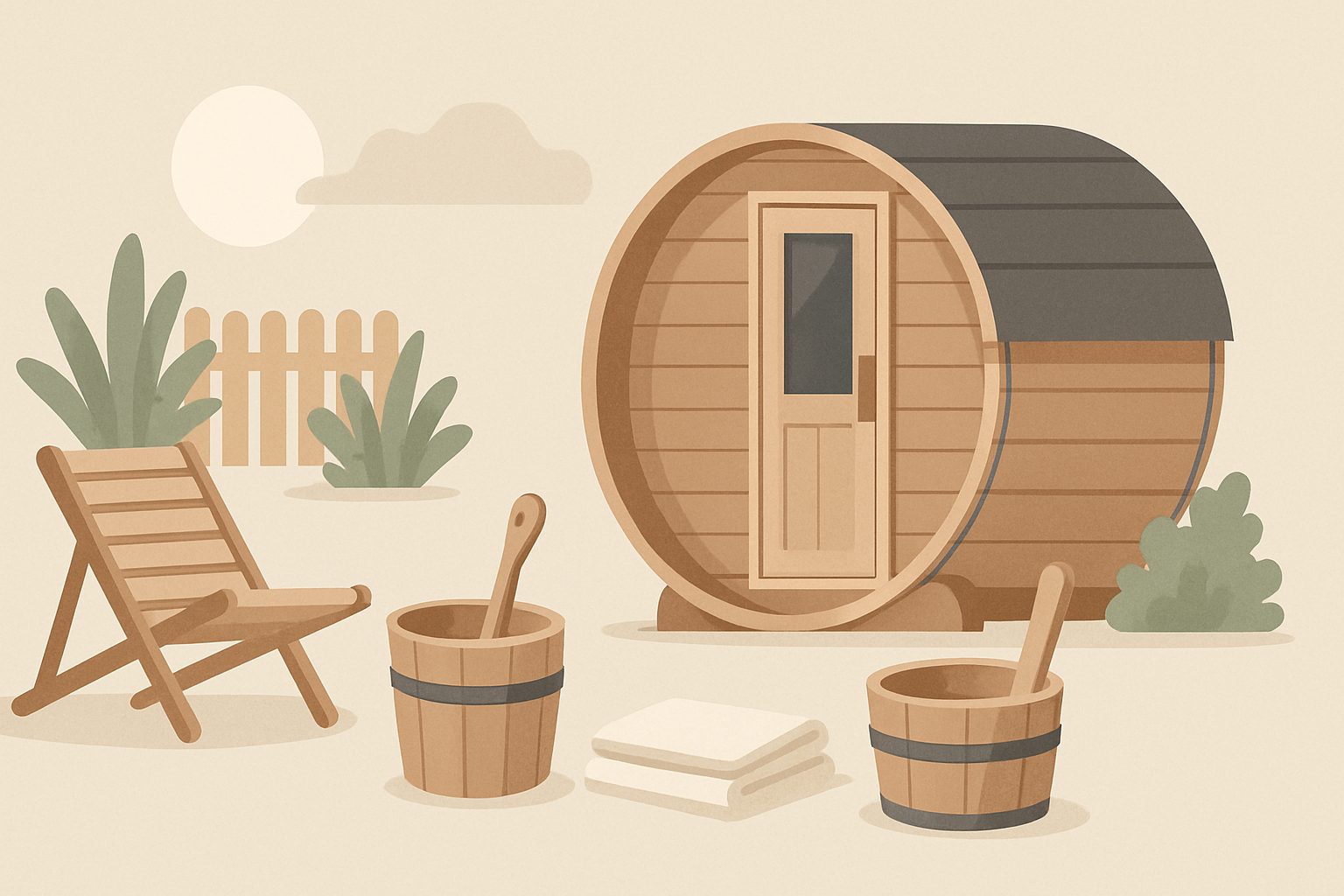
Barrel saunas are the most popular choice for UK gardens. They're compact, quick to heat, and their curved design sheds water naturally. A standard 1–2 person barrel takes up roughly 1.5 x 2 metres of space. Barrels tend to hold heat efficiently because of their shape, though interior space feels tighter than equivalent cabin models. Expect to pay £2,500–£8,000 depending on materials and heating method.
Log cabin saunas offer more interior room and feel more like a traditional structure. They suit larger gardens and groups of 4–6 people. The trade-off is space: you'll need 2.5 x 3 metres minimum, plus clearance around it. Heating takes longer in a large cabin, and they're more expensive to build and install. Budget £4,000–£15,000 for a decent one.
Sauna pods are prefabricated, insulated shells that heat quickly and retain temperature well. They're generally smaller (1–2 person), modern-looking, and require less assembly than barrels or cabins. They're newer to the UK market, so choice is limited and prices range from £3,500–£10,000.
Infrared saunas work by emitting radiant heat directly rather than heating the air. Some people prefer them because they feel less intense and heat up faster. The downside: they don't create the same authentic sauna experience with humidity and steam, and they're entirely electric—there's no option for traditional heat. They're also portable and need less garden space.
Heating Systems: Wood, Electric, or Something Else?
Wood-fired stoves are traditional and hugely popular in the UK. A quality stove heats a sauna faster than electric and runs with no ongoing electricity cost. The catch: you'll need dry wood storage, time to manage the fire, and a clear gap between the stove and wooden interior walls for safety. Most UK installations need a chimney that extends above your roof line, which adds cost and complexity. Installation £1,500–£3,000 depending on your setup.
Electric heating is convenient and complies easily with building regulations. It's slower than wood but requires no flue work and minimal maintenance. Running costs vary: a 6–8 kW heater uses roughly £1–£1.50 per session in electricity. Electric suits people who want consistency and don't want to manage fuel.
Hybrid systems exist but are rare in consumer UK saunas. Most are either wood-fired or electric, not both.
For UK gardens, wood-fired is popular if you've got space and enjoy managing heat sources. Electric is practical if you prioritize convenience and live in a built-up area where smoke or chimney work isn't feasible.
Materials: Wood Type and Insulation Matter
Siberian spruce and Nordic pine are the gold standard for sauna interiors. Both are naturally rot-resistant, stable in temperature swings, and won't splinter. Avoid cheap softwoods that warp easily. Expect premium saunas to use Siberian spruce; budget models may use Canadian cedar or hemlock, which are fine but less durable.
Exterior cladding should shed water reliably. Cedar is attractive and naturally rot-resistant but requires maintenance. Treated pine is cheaper and more durable with less upkeep. Some saunas have rendered or painted finishes—these hide the wood but hide problems too.
Insulation is critical for UK weather. You want at least 100mm of mineral wool or rock wool between the inner and outer layers. Poor insulation means you're heating the outside air, not the sauna, and running costs soar. Check product specs—reputable manufacturers will state this clearly.
Size and Space Requirements
A 1–2 person sauna needs roughly 1.5 x 2 metres of floor space. A 4–6 person sauna needs 2.5 x 3.5 metres. Budget an extra 1 metre on at least one side for ventilation and access. You also need space for a chimney if wood-fired—it must clear your roof height. Check local planning rules: most domestic garden saunas under 15 cubic metres in volume don't need planning permission, but your local council can vary on this. Always check before buying.
Budget Breakdown
Entry-level barrel sauna (1–2 person, wood-fired): £2,500–£4,000. Basics are solid, but expect to replace gaskets and manage maintenance.
Mid-range cabin (4 person, wood-fired or electric): £4,500–£7,000. Better insulation, more durable wood, reliable heating.
Premium cabin or bespoke barrel (4–6 person, quality finishes): £8,000–£15,000+. High-grade timber, excellent insulation, longer lifespan.
Add £1,500–£3,000 for professional installation, and £500–£2,000 for site preparation and electrics (if needed).
Final Practical Considerations
Water drainage is often overlooked. Saunas need to sit on a level, well-draining base—concrete slabs or gravel work. Standing water rots the exterior quickly. Ventilation matters: your sauna needs air to enter and exit so it doesn't trap moisture. A good design includes passive vents or a fan that cycles air when the door opens.
Maintenance varies by type. Wood-fired saunas need annual chimney sweeps and occasional stove maintenance. Electric saunas need almost nothing beyond keeping the interior clean. Both need the wood treated with sauna-grade oil every few years if you want it to stay looking good.
Use this framework to narrow down which type, size, and heating system fits your space, budget, and lifestyle. From there, you can compare specific models and read detailed reviews before committing.
More options
- Harvia Wood-Fired Sauna Stoves (Amazon UK)
- Barrel Sauna Kits (Garden) (Amazon UK)
- Electric Sauna Heaters for Outdoor Cabins (Amazon UK)
- Sauna Wood Treatment and Care Products (Amazon UK)
- Sauna Accessories Bundle (Ladle, Bucket, Thermometer) (Amazon UK)