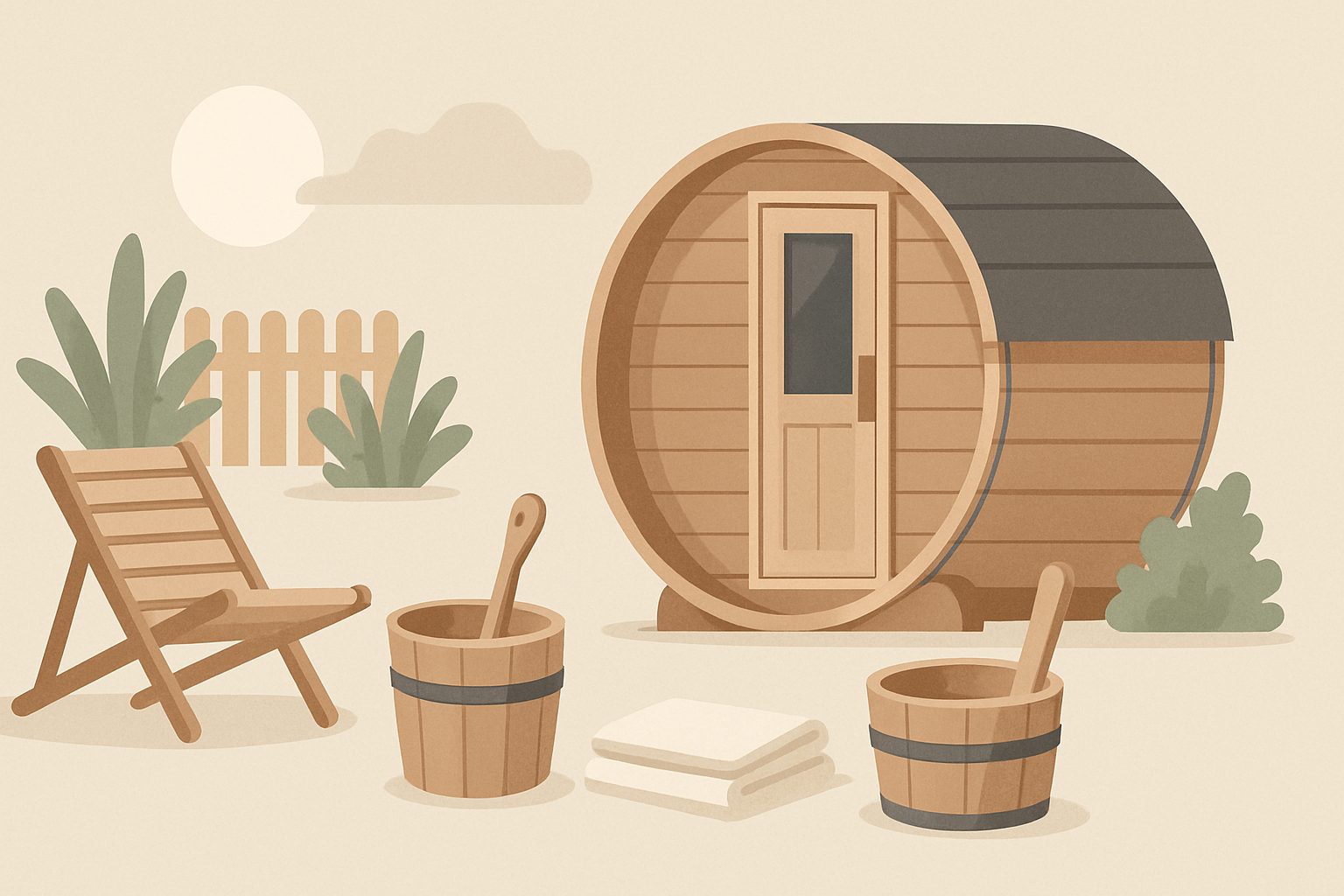
Best Outdoor Saunas for 2 People UK: Perfect Couples' Garden Saunas
A sauna built for two solves a genuine problem for couples and small households: traditional models are oversized, expensive, and eat space. A proper 2-person sauna delivers the same therapeutic heat and wood-burning ritual in a footprint that fits most UK gardens, without the £15,000+ price tag of larger installations.
The challenge is finding one that actually fits two adults comfortably without overheating in minutes or taking six hours to reach temperature. This guide looks at what separates a cramped novelty from a genuinely usable couples' sauna.
Barrel vs. Cabin: Which Design Works Better for Two?
Barrel saunas have become the default for small spaces, and for good reason. Their cylindrical shape concentrates heat efficiently—you need less wood and less internal space to reach 70–80°C. A 2-person barrel typically measures 1.5–1.8 metres long and 1.2 metres in diameter, fitting snugly against a garden fence or between trees.
Cabin saunas, by contrast, are more spacious in practice. A 2-person cabin might be 1.2 × 2 metres, giving you side-by-side bench space instead of the slightly cramped back-to-back or one-above-one seating of some barrels. You sacrifice some heat efficiency but gain comfort and the option to change positions. Cabins also handle the UK's damp climate better—the larger internal volume naturally resists moisture accumulation.
The trade-off: barrel saunas heat faster (30–45 minutes) and cost less (£2,500–£5,500). Cabins need 45–90 minutes and cost more (£4,000–£8,000), but you won't feel like you're packed into a shipping container.
Bench Space and Layout: The Reality of Comfort
Marketing photos are deceptive. A sauna listed as "2-person" sometimes means "two very friendly people who don't mind touching elbows." Usable bench depth matters more than length. You need at least 60 centimetres (preferably 70 cm) to sit upright without your knees bumping the opposite wall.
Barrel saunas compromise here by design. The cylinder tapers, so the lower bench (often the hotter seat) is narrower than the upper one. If you're both regular users, you might alternate benches across sessions, or accept that one of you perches higher. This isn't catastrophic—just honest about the format.
Cabin layouts avoid this: two proper benches facing each other (or one lengthwise bench if it's a side-entry design) give you genuine options. You can both sit without negotiation. The downside is weight (harder to site on uneven ground) and cost.
Heat-Up Time: How Quickly Do You Actually Get Hot?
Barrel saunas win here decisively. A wood-fired barrel reaches 70°C in 30–40 minutes. This matters on a Tuesday evening: you light it, prep a drink, chat for half an hour, and you're in.
Cabin saunas, especially poorly insulated ones, can meander to temperature. Budget 60 minutes as a realistic baseline, sometimes 90 if it's October and there's a wind. Some newer models with thicker cedar cladding and better seals improve this, but you're still waiting longer.
Electric heaters (installed in some cabins) offer a false promise: they're convenient but running costs exceed wood-fired saunas in most parts of the UK, and they strip the ritual—no crackling, no wood smell, no tangible reason for the heat.
Price and What It Actually Covers
A decent 2-person barrel: £2,500–£5,000. Usually includes the stove, stones, thermometer, and basic installation help (delivered flat-packed, or pre-assembled for extra cost).
A decent 2-person cabin: £4,000–£8,000. Similar inclusions, plus better internal finishes.
Budget models (both types, £1,500–£2,500) exist but often cheap out on stove quality or cedar grade. A weak stove means uneven heating and more time spent tending a fire that won't settle. Cheaper wood warps faster in UK rain, leading to cracks and water ingress within two to three years.
Maintenance isn't free either. Wood-fired saunas need chimney sweeps annually (£150–£300). Cedar needs light sanding every few years (DIY or £500–£800 contractor). Both types benefit from a shelter or porch cover in the UK climate; add another £1,500–£3,000 if you build one.
Key Considerations for UK Gardens
Drainage. Saunas pump water into surrounding ground. Use gravel or a purpose-made moisture barrier underneath; sitting a sauna on grass leads to rot within two years.
Wind and exposure. Exposed sites mean higher heat loss and longer warm-up times. A south-facing spot with a windbreak (hedge, fence, wall) is ideal.
Building regulations. Some councils require notification for permanent structures. Check locally; a sauna under 15 square metres and not needing utilities usually skips planning, but confirm with your local authority.
Neighbours. Wood smoke at dawn or evening bothers people. Thick forest or substantial distance helps; corner-of-garden placement less so.
What Makes a 2-Person Sauna Worth Using
A couples' sauna genuinely works when it's easy enough to use regularly. That means minimal setup, honest heat, and enough comfort to not feel like penance. A barrel excels at "light the fire Friday night, in the sauna in 40 minutes" ease. A cabin offers more physical comfort but demands patience and planning.
Either way, the ritual—not the temperature reading—is why people actually use them past summer. The act of building a fire, waiting together in heat, then stepping into cool air sharpens the senses in a way a spa treatment doesn't quite reach.
For couples in smaller gardens, or households wanting social warmth without the footprint of a 4-person commercial build, a 2-person sauna hits the balance most other models miss.
More options
- Harvia Wood-Fired Sauna Stoves (Amazon UK)
- Barrel Sauna Kits (Garden) (Amazon UK)
- Electric Sauna Heaters for Outdoor Cabins (Amazon UK)
- Sauna Wood Treatment and Care Products (Amazon UK)
- Sauna Accessories Bundle (Ladle, Bucket, Thermometer) (Amazon UK)